
Disclosure: This post contains affiliate links. If you buy through them, AllInsides may earn a small commission at no extra cost to you.
The cabinet beneath a bathroom sink is valuable storage wrapped around awkward plumbing and exposed to leaks. Without a simple system, products disappear at the back while daily items crowd the counter.
The best solution starts with safety and access—not matching containers. Inspect the plumbing, protect the cabinet base and use removable zones that can be lifted out in seconds.
This guide shows you how to create useful under-sink storage without blocking shutoff valves or keeping moisture-sensitive and hazardous items in the wrong place.
Key Takeaways
- Empty and inspect the cabinet before buying organizers.
- Keep plumbing and shutoff valves visible and accessible.
- Use a waterproof mat plus removable bins to contain small leaks.
- Organize by access: daily products in front, backups behind.
- Store medicines in a cool, dry place and hazardous cleaners securely away from children.
Contents
- 1. Inspect and protect
- 2. Create removable zones
- 3. Use vertical space
- 4. Use cabinet doors
- 5. Know what not to store
- How to choose organizers
- Common mistakes
- FAQs
1. Empty, Inspect and Protect the Cabinet
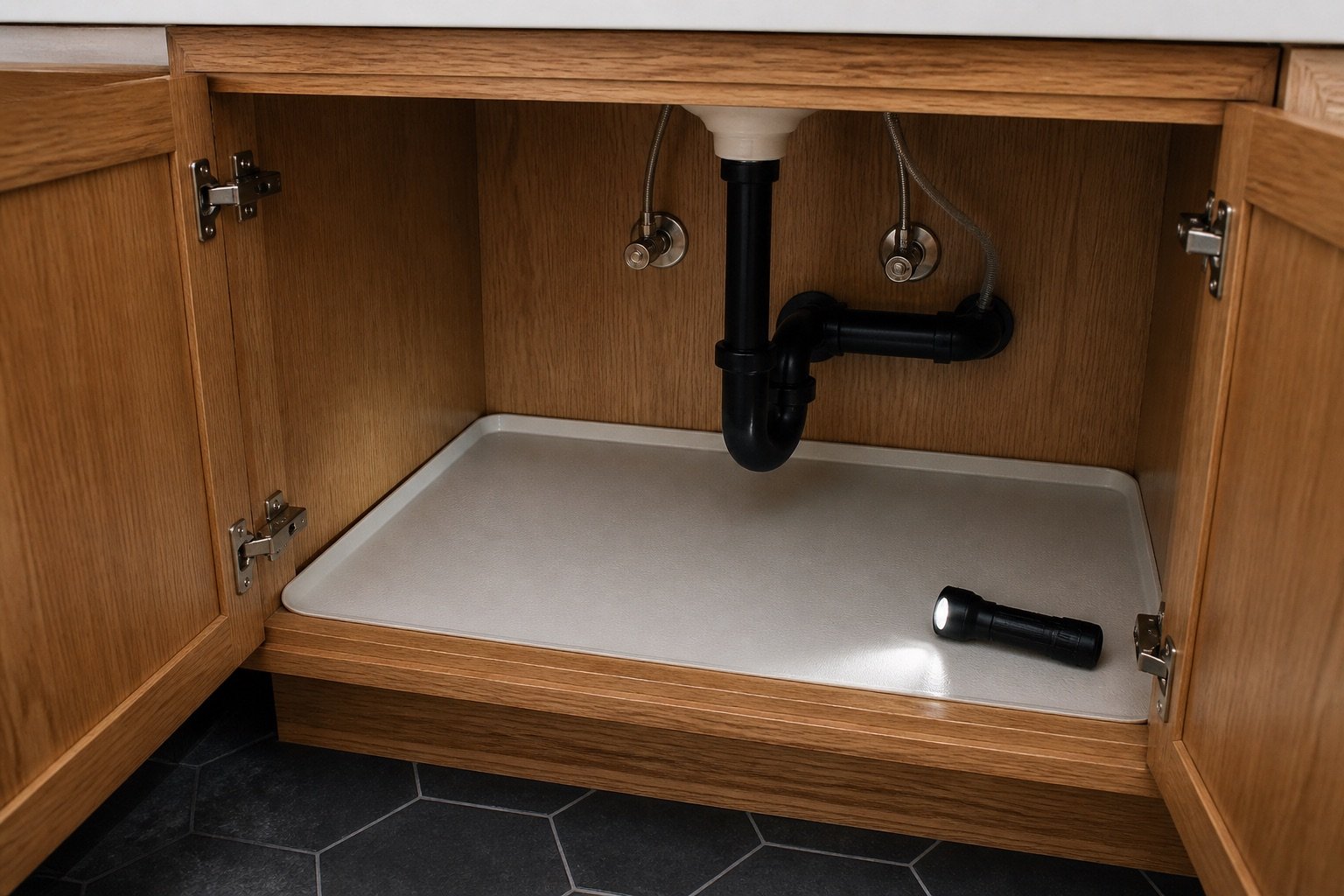
Remove everything and check the cabinet base, pipe joints, supply lines and shutoff valves for moisture, staining or swelling. A persistent drip, damp smell or damaged board needs attention before products return. Do not hide a suspected leak behind storage.
Measure the usable spaces on both sides of the trap, including height beneath pipes. Fit a light-colored waterproof under-sink mat with a raised edge so a small leak is easier to see and contain. It is protection, not a substitute for repair.
2. Create Removable Product Zones
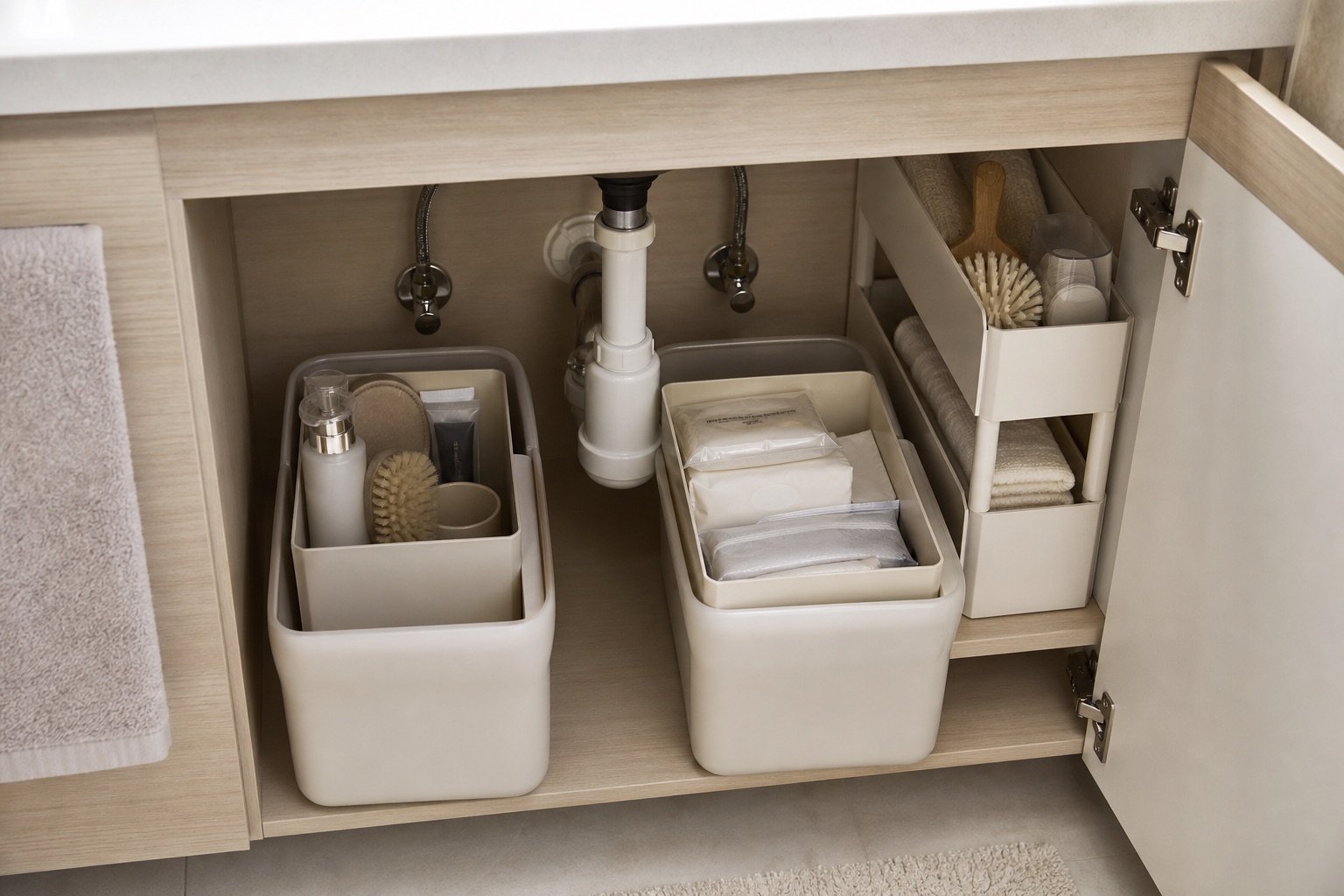
Group products by routine: daily care, hair, spare toiletries and cleaning. Give each category one washable bin that can be pulled onto the floor or counter. This is more useful than reaching through rows of loose bottles.
Keep daily items toward the front and backups behind them. Use open bins for frequently handled dry toiletries and contained bins for bottles that may drip. Two-tier pull-out organizers use height well, but check that both drawers clear the trap and hinges.
| Item group | Best location | Container |
|---|---|---|
| Daily toiletries | Front, easy side | Open removable bin |
| Backup products | Back or lower tier | Washable handled bin |
| Hair accessories | Door or shallow drawer | Small divided caddy |
| Cleaning cloths | Dry upper zone | Ventilated basket |
| Plumbing | Center | Keep clear |
3. Use Vertical Space Without Blocking Plumbing
Place a narrow tiered unit on the side with the clearest vertical space instead of spanning the whole cabinet. Choose independent units that can be removed when plumbing needs inspection.
Stackable drawers suit small cosmetics and spares, but fixed stacked boxes force you to lift several containers to reach the bottom. Pull-out or individually removable storage is easier to maintain.
4. Use Cabinet Doors Carefully
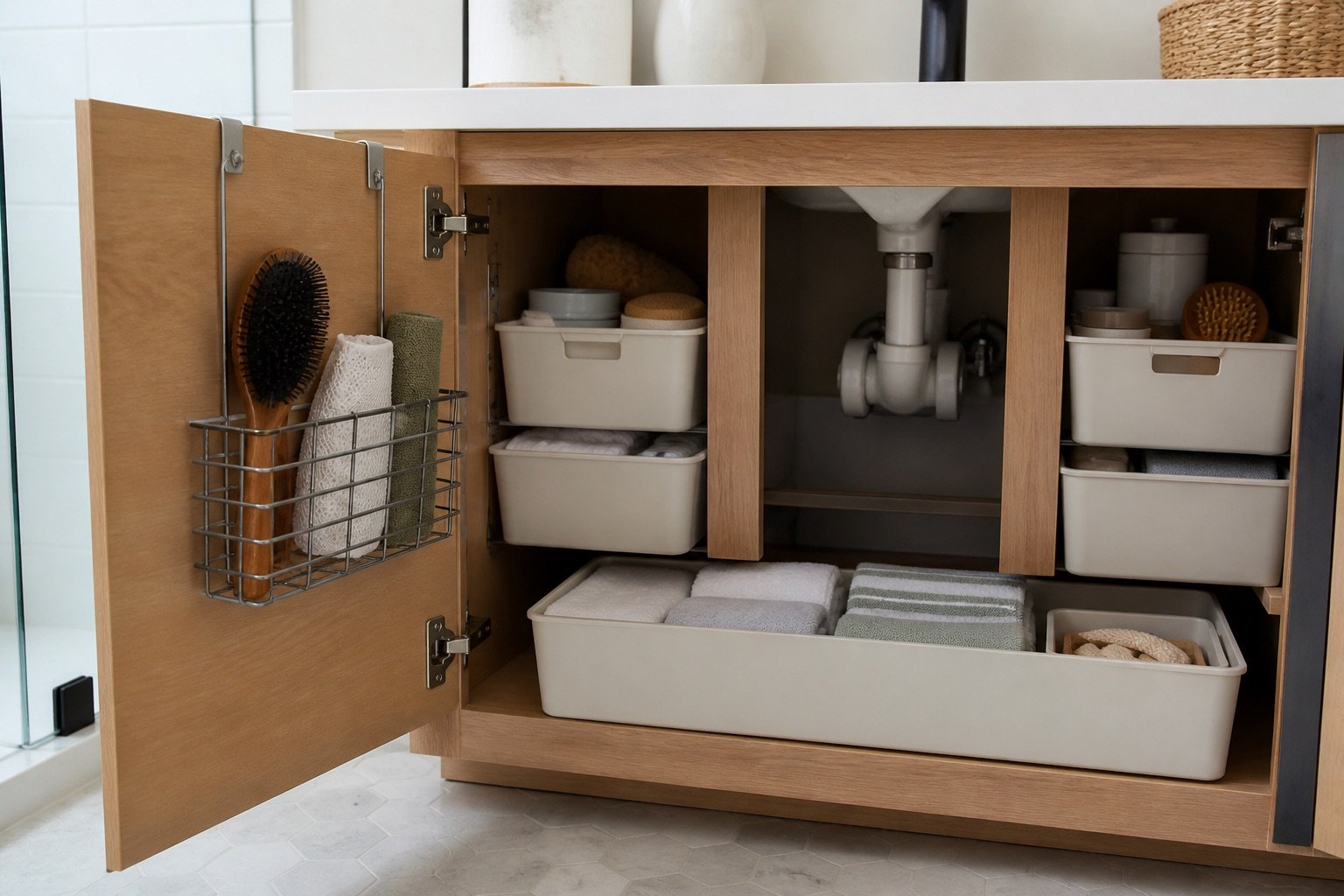
A slim cabinet-door basket can hold brushes, cloths or lightweight daily items. Measure the door frame, shelf position and internal plumbing so the basket does not collide when closing.
Avoid overloading doors or drilling into thin panels without checking suitability. Adhesive organizers need a clean, compatible surface and may fail in humidity.
5. Know What Not to Store Under the Sink
Bathroom humidity and leak exposure make this a poor place for medicines, important paper stock and unprotected electrical appliances. Store medicines in their original packaging in a cool, dry, secure location according to their instructions.
Homes with children or pets should keep cleaners, razors and hazardous products out of reach and preferably in locked storage. Never decant chemicals into food or drink containers, and never mix cleaning products.
How to Choose Under-Sink Organizers
- Map the plumbing. Measure each usable pocket separately.
- Prioritize removal. Every organizer should lift or slide out easily.
- Choose washable materials. Smooth plastic or coated metal handles moisture better than cardboard.
- Keep valves clear. Leave a direct line of sight and hand access.
- Buy only after editing. Remove expired and unused products before sizing bins.
Common Mistakes to Avoid
- Organizing before checking leaks: Containers can conceal early damage.
- Buying one wide shelf: It may not fit around the trap.
- Filling every gap: Plumbing needs inspection and repair access.
- Over-decanting: Original labels carry important directions and warnings.
- Keeping medicines in humidity: Follow their storage directions elsewhere.
- Making unsafe products accessible: Use high or locked storage when children are present.
Frequently Asked Questions
What should be stored under a bathroom sink?
Daily toiletries, sealed backup products, washable cloths and a small safe cleaning kit can work when organized in removable bins.
How do I organize around pipes?
Measure the separate spaces beside and beneath each pipe, then use narrow independent organizers rather than one unit spanning the cabinet.
Should I use clear bins?
Clear bins make stock visible; opaque bins look calmer. Both work if they are washable, removable and assigned one category.
Can medicine be stored under the bathroom sink?
Usually no. Bathrooms are often warm and humid, and the cabinet is exposed to leaks. Follow the product’s storage directions in a cool, dry, secure location.
How can I detect leaks faster?
Keep plumbing visible, use a pale waterproof mat and inspect the cabinet regularly. Repair drips promptly.
How often should I reset the cabinet?
Do a quick monthly check for moisture and empty products, plus a deeper edit every three to six months.
Conclusion
A functional under-sink cabinet is not packed to maximum capacity. It protects the surface, preserves plumbing access and lets every product category come out in one movement.
Start with the leak check, then add only the bins required for products you use. The result is a safer cabinet, a clearer counter and a system that is easy to reset.