
Disclosure: This post contains affiliate links. If you buy through them, AllInsides may earn a small commission at no extra cost to you.
Dinnerware sets often look like an easy purchase until a cupboard fills with unused mugs, tiny side plates and too few bowls. The best collection is not the largest box; it is the smallest group of pieces that supports how your household actually eats.
For many homes, the practical formula is household size plus two to four extra settings. Your dishwasher routine, storage space and usual number of guests should adjust that number—not an imaginary formal dinner.
This guide explains how many settings to buy, which pieces earn their space and how to choose a material and shape that will remain useful beyond current trends.
Key Takeaways
- Start with household size, then add two to four settings for guests and breakages.
- Buy more only if your hosting or washing routine genuinely requires it.
- Dinner plates, versatile low bowls and smaller plates cover most everyday meals.
- Check cabinet, dishwasher and microwave dimensions before purchasing.
- Choose an open-stock collection when easy replacement matters.
Contents
- 1. Calculate the right number
- 2. Choose useful pieces
- 3. Compare materials
- 4. Check size and storage
- 5. Add style without a second set
- How to choose
- Common mistakes
- FAQs
1. Calculate the Right Number of Place Settings
Count everyone living in the home, add the number of guests you host regularly, then consider how often you run the dishwasher. A couple who occasionally hosts two friends may be comfortable with six settings. A family of four that regularly entertains may prefer eight.
| Household | Practical starting point | When to add more |
|---|---|---|
| One person | 4 settings | Frequent guests or infrequent washing |
| Two people | 4–6 settings | Regular meals with another couple |
| Three people | 6 settings | Family gatherings |
| Four people | 6–8 settings | Regular entertaining or many daily meals |
| Five or more | Household + 2–4 | Match the largest usual gathering |
Large annual events do not need to dictate everyday storage. Coordinating borrowed or inexpensive supplementary plates for rare occasions is often more sensible than storing twelve complete settings all year.
2. Choose the Pieces You Actually Use
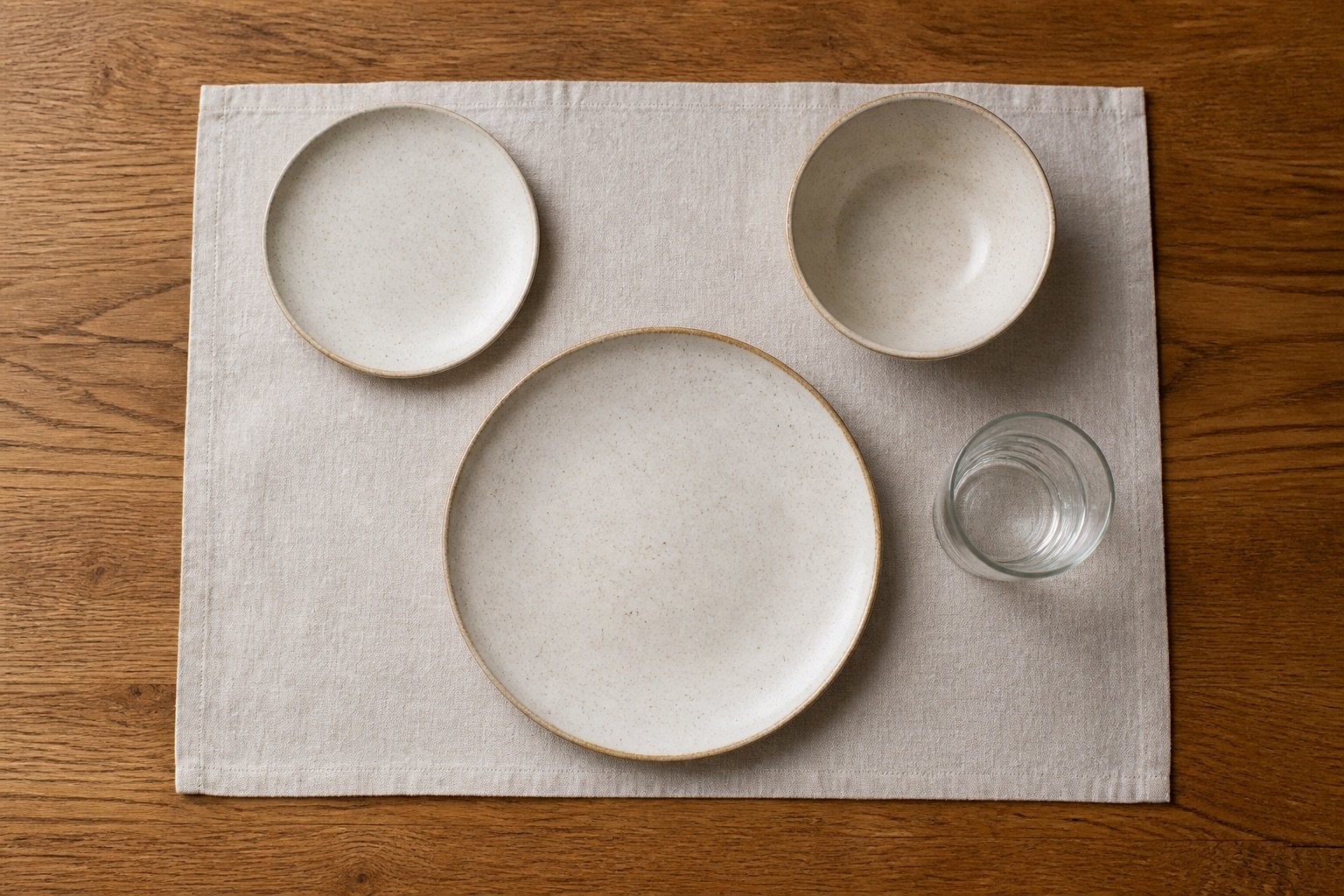
A traditional setting may include a dinner plate, side plate, bowl and mug. But your diet matters more than convention. If you eat pasta, grain bowls and curries, a wide low bowl may be the most-used piece. If mugs already fill the cupboard, choose a set without them.
Start with stoneware sets without mugs or build from open-stock pieces. Two serving bowls, one platter and a small sauce jug cover many gatherings without creating a second formal collection.
3. Compare Dinnerware Materials
Porcelain is strong for its weight, usually nonporous and often easy to stack. Stoneware feels substantial and suits the warm, handcrafted look currently in demand, but pieces can be heavier and reactive glazes vary. Bone china is light and durable but usually costs more. Tempered glass can be thin and space-efficient, though care requirements differ by maker.
Always follow the manufacturer’s microwave, dishwasher and oven guidance. Handmade-looking does not automatically mean fragile, and heavy does not automatically mean durable.
4. Check Plate Size and Storage Before Buying
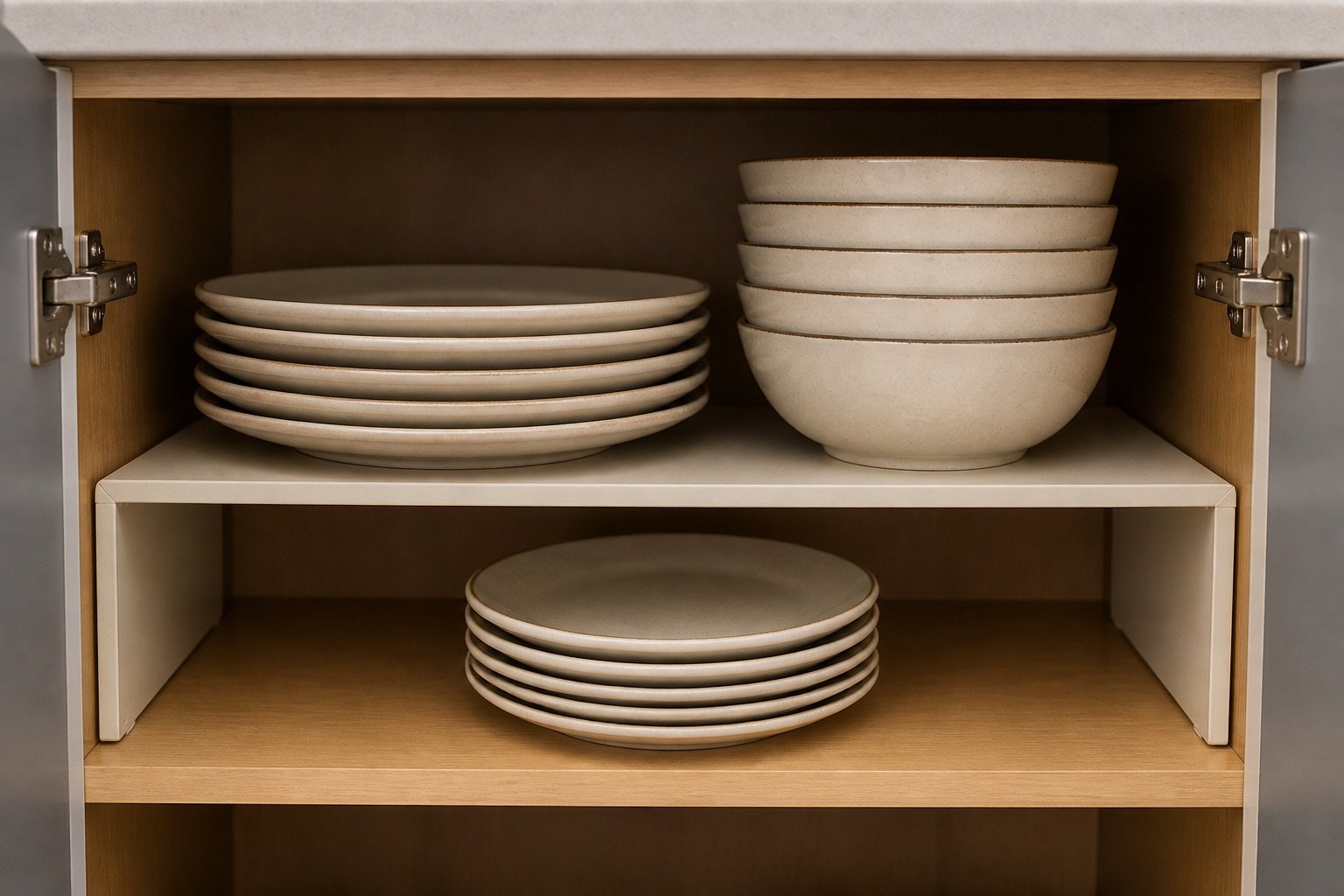
Measure the cabinet’s internal width, depth and shelf height. Deep coupe plates and tall stacks can prevent doors from closing. Check that plates fit between dishwasher tines and that bowls nest without becoming difficult to separate.
If vertical space is wasted, a sturdy cabinet shelf riser for plates can separate bowls from plates. Avoid stacks so tall that lifting the bottom piece becomes risky.
5. Add Style Without Buying a Second Set

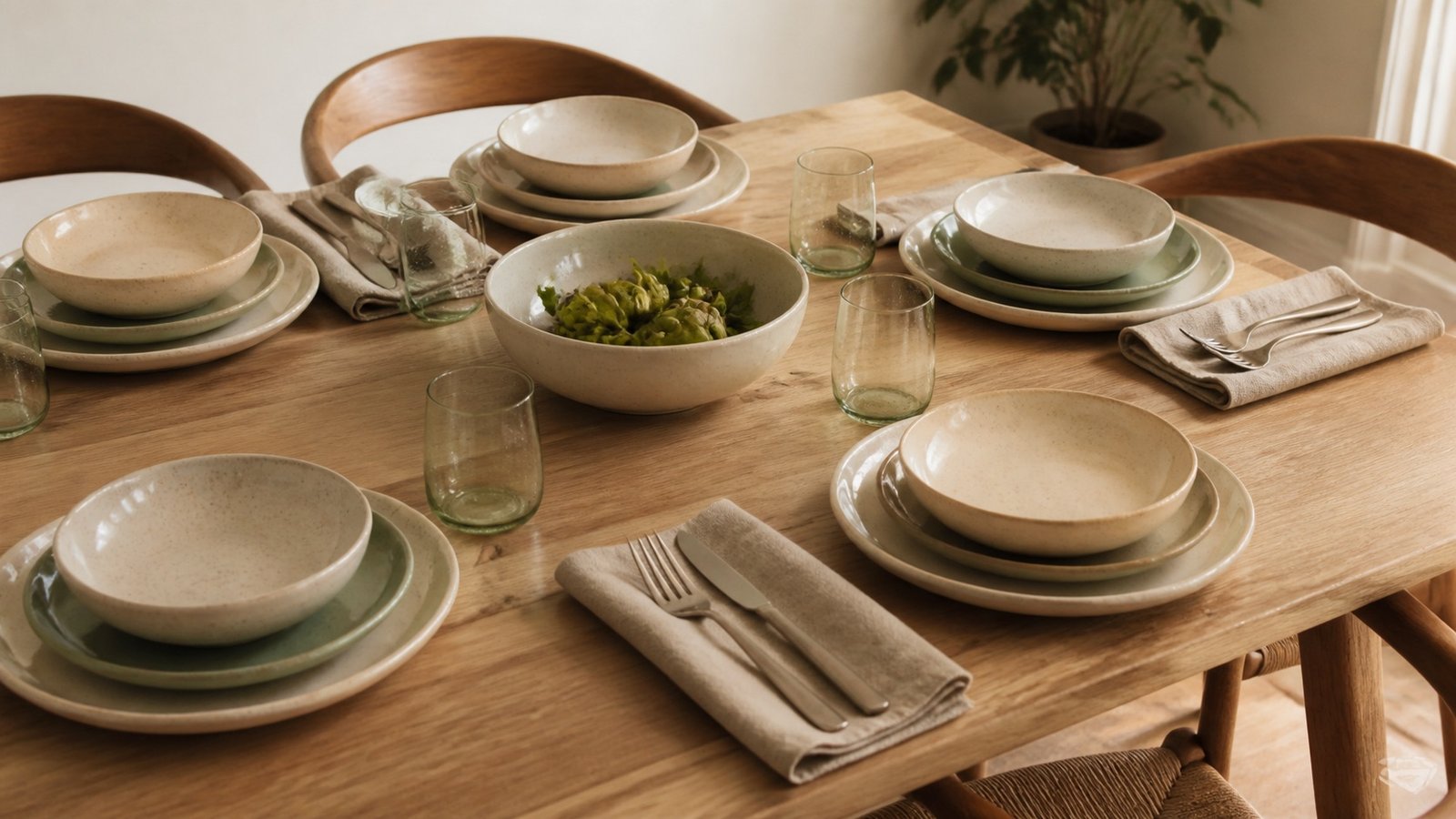
Warm ivory, sand, muted green and subtle speckling create the organic-modern table readers are saving now. A neutral everyday base stays flexible; color can come from serving bowls, linens and glassware rather than a complete seasonal set.
Reactive glaze makes each piece slightly different, so inspect return policies and expect variation. You can introduce the look with reactive-glaze serving bowls while keeping replaceable neutral plates underneath.
How to Choose Your Dinnerware
- Audit current pieces. Note what you use and what remains untouched.
- Calculate settings. Use household size plus realistic guests.
- Measure storage and appliances. Record cabinet, dishwasher and microwave limits.
- Handle a sample if possible. Check weight, rim comfort and stacking.
- Confirm replacement options. Open-stock pieces reduce waste after one breakage.
Common Mistakes to Avoid
- Buying by piece count: A 24-piece set may include components you never need.
- Ignoring weight: A tall stack of heavy stoneware can be awkward.
- Choosing oversized plates: They may not fit cabinets or dishwashers.
- Buying twelve for rare events: Everyday storage pays the price.
- Assuming all ceramics are equivalent: Care, porosity and durability vary.
- Choosing a discontinued fashion color: Replacements may be impossible.
Frequently Asked Questions
How many dinnerware settings does a couple need?
Four to six settings suit many couples. Choose six if you host another couple or prefer not to wash after every meal.
How many settings does a family of four need?
Six to eight is a practical range, depending on guests and washing frequency.
What pieces are essential?
Dinner plates, smaller plates and versatile bowls cover most meals. Add mugs only if you need them.
Is porcelain or stoneware better?
Porcelain is often lighter and space-efficient; stoneware offers weight and organic texture. Quality and care instructions matter more than the category alone.
Should everyday and formal dinnerware be separate?
Most homes do not need two full sets. A durable neutral collection can be dressed up with linens, glassware and serving pieces.
What color is easiest to keep long term?
Warm white and gentle neutrals display food well and are easier to coordinate. Add trend colors through smaller replaceable pieces.
Conclusion
The right dinnerware collection fits your meals, storage and washing routine. Begin with household size plus two to four, then remove any piece category you know you will not use.
A neutral, replaceable base with a few textured serving pieces delivers the warm, collected look popular now without overcrowding the cupboard. Useful dinnerware should make daily meals easier—not create another organizing problem.