Disclosure: This post contains affiliate links. If you buy through them, AllInsides may earn a small commission at no extra cost to you.
Putting a home office in a small bedroom can solve a space problem while creating a new one: work becomes the first thing you see in the morning and the last thing you see at night.
The answer is not simply the narrowest desk available. A successful bedroom workspace needs enough depth for comfortable screen use, a supportive chair, controlled cables and a clear way to signal that the workday has ended.
This guide helps you fit a genuinely usable office into a compact bedroom without sacrificing circulation, storage or the calm feeling the room needs for sleep.
Key Takeaways
- Protect the route around the bed before assigning space to a desk.
- A desk around 24 inches deep is more comfortable for regular monitor use.
- Use wall storage and a compact ergonomic chair instead of shrinking the work surface too far.
- Place the screen perpendicular to a window where possible to reduce glare.
- Create an end-of-day routine that hides equipment and changes the lighting.
Contents
- 1. Choose the least disruptive position
- 2. Select the right desk type
- 3. Protect everyday comfort
- 4. Move storage upward
- 5. Separate work from sleep
- How to choose your setup
- Common mistakes
- FAQs
1. Choose the Least Disruptive Position
Draw the bed, wardrobe doors and room door on a simple floor plan before placing the desk. Preserve the most frequently used walkway and enough clearance for drawers and doors to open. A workspace in a shallow alcove, beside a wardrobe or on the wall furthest from the pillow often feels less intrusive than one squeezed into the bedside route.
Natural light is helpful, but facing a bright window can create screen glare and eye fatigue. Position the desk perpendicular to the window when possible, then add a blind or curtain for control. Avoid placing a large monitor directly opposite the bed if its dark screen will dominate the room after work.
| Space or routine | Best desk approach | Main tradeoff |
|---|---|---|
| Daily full-time work | 24 in deep fixed desk | Requires permanent floor area |
| Occasional laptop work | Fold-down wall desk | Limited monitor and storage capacity |
| Work must disappear | Secretary or cabinet desk | Deeper and usually more expensive |
| Very narrow wall | Slim console desk | Better for a laptop than a large monitor |
| Unused wardrobe section | Closet office | Reduces clothing storage |
2. Select the Right Desk Type
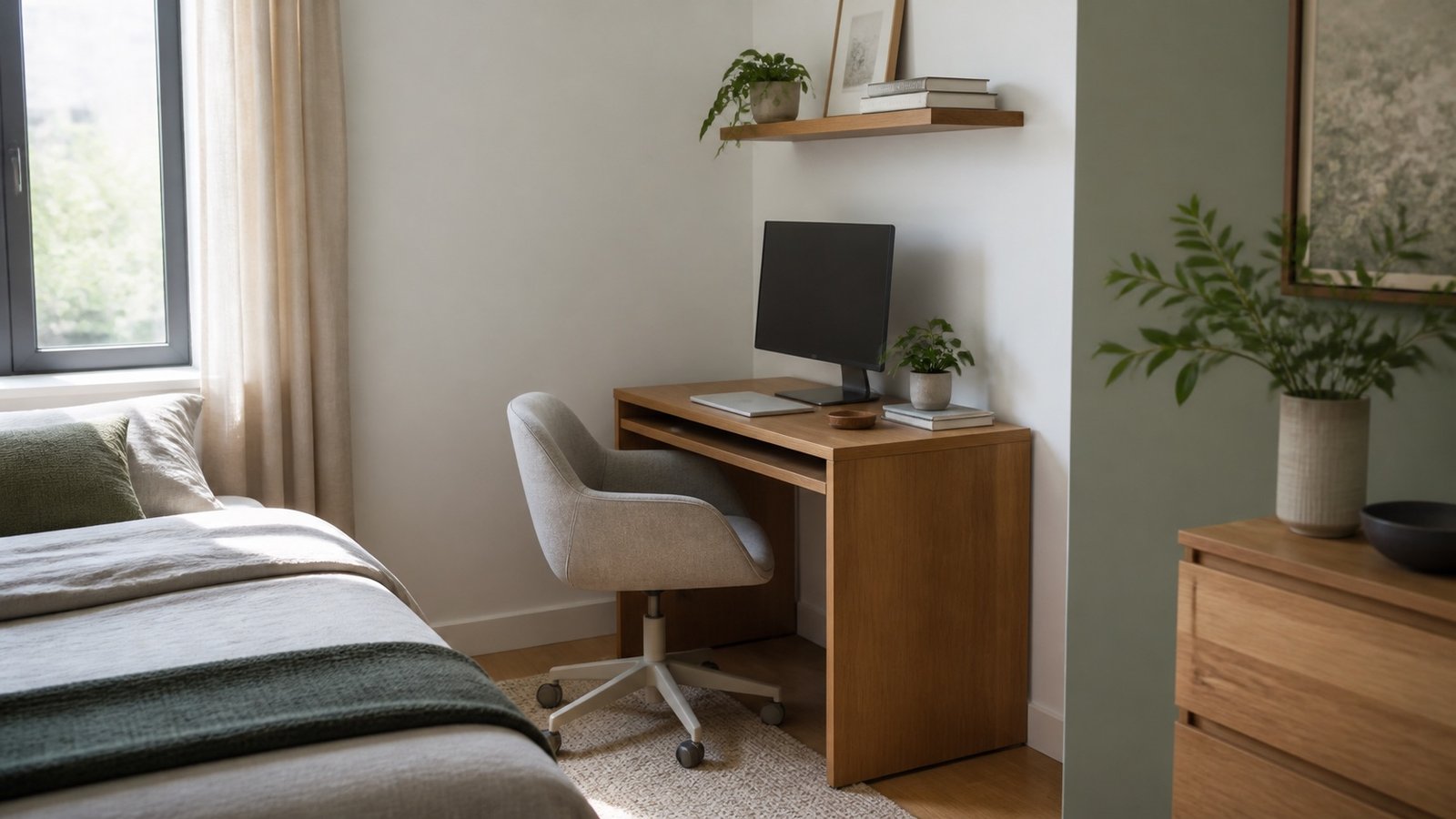
Choose according to how many hours you work, not only how little space the furniture occupies. For regular monitor use, a surface around 24 inches deep gives more useful viewing distance and room for the keyboard. A shallower console can suit short laptop sessions but may feel cramped for a full workday.
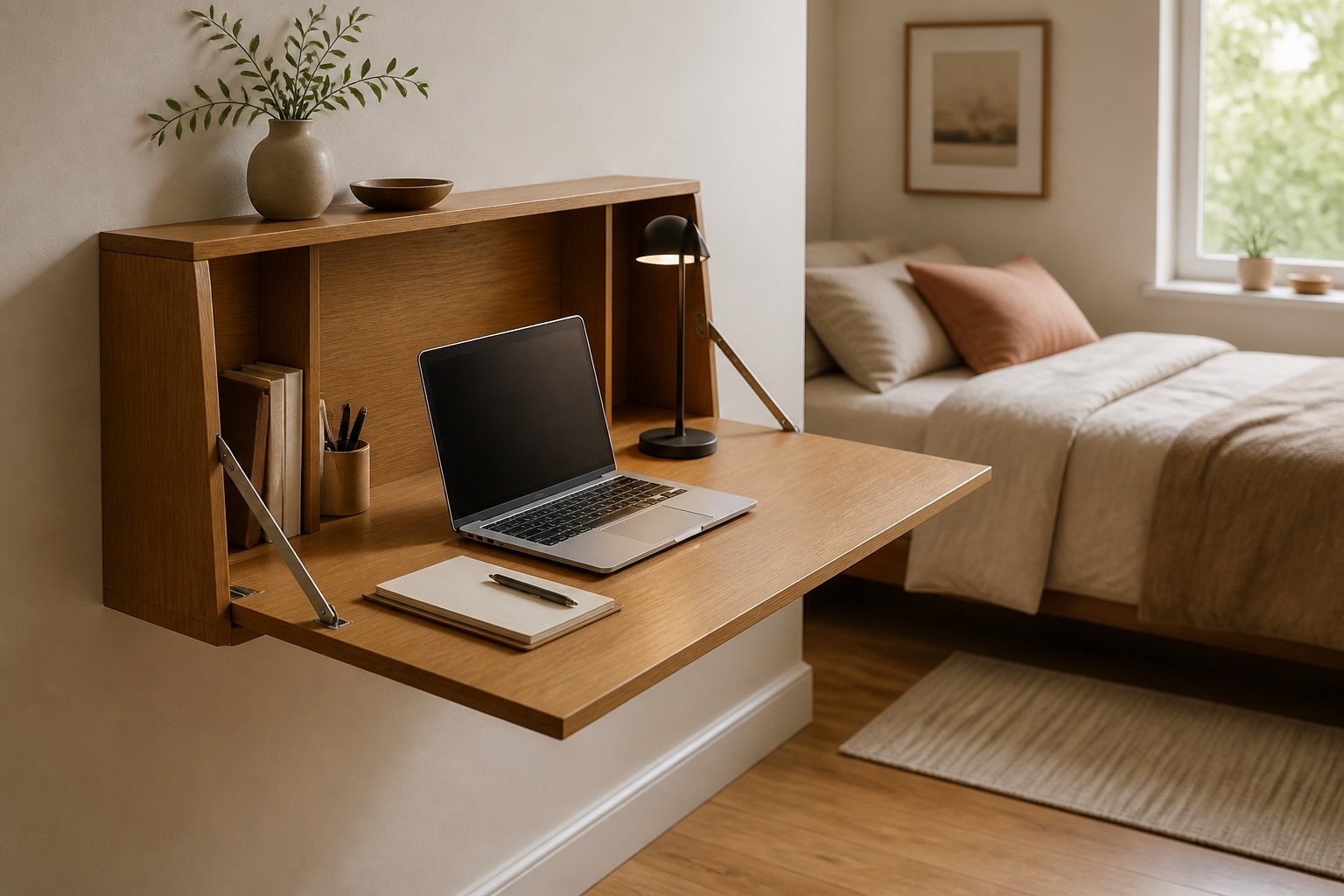
A fold-down wall desk with storage frees the floor when closed and visually ends the workday. Check its load rating, fixing requirements and open depth. A secretary desk is a more substantial alternative when you need to conceal a monitor and supplies rather than a laptop alone.
3. Protect Everyday Comfort
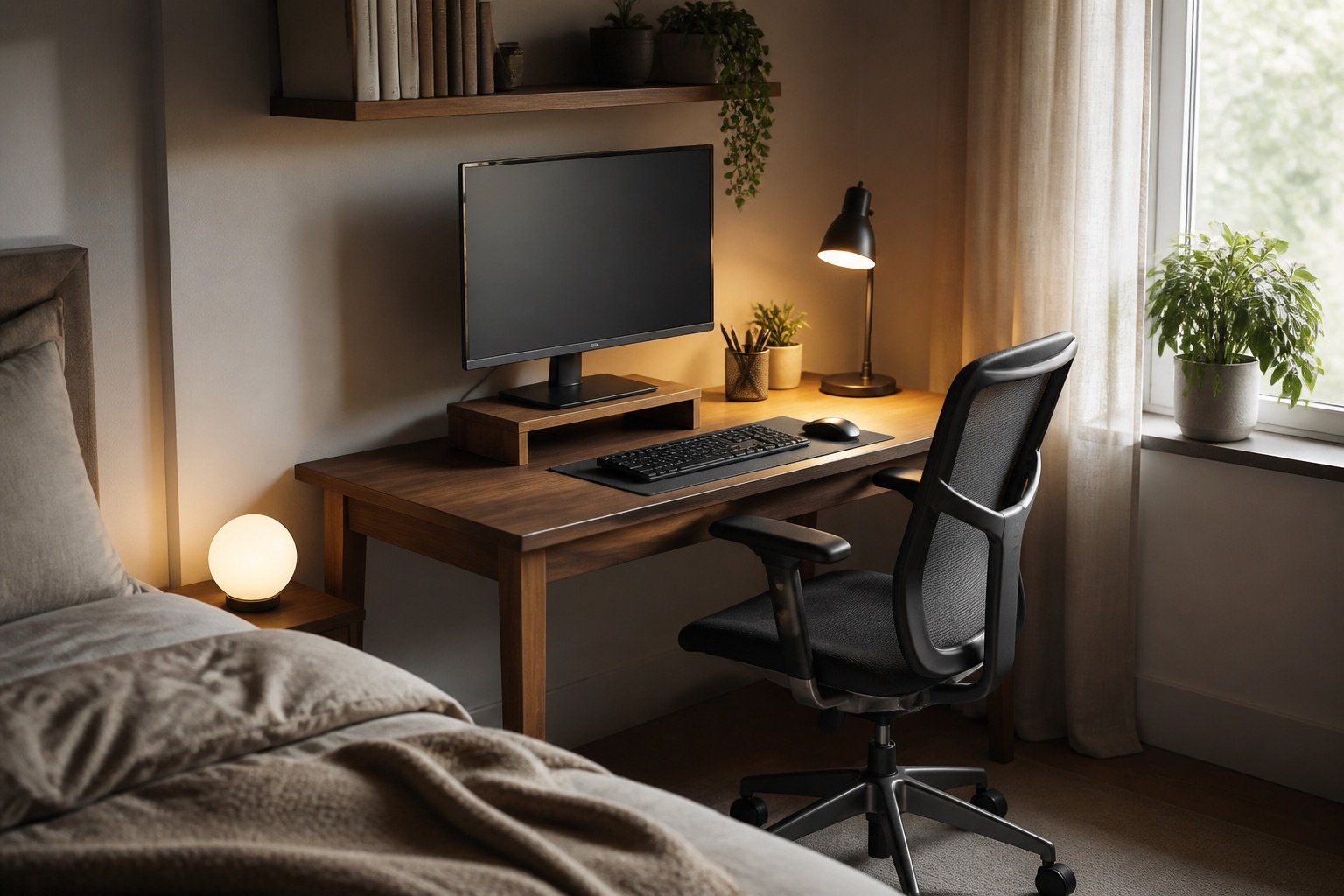
Compact does not have to mean uncomfortable. Set the top of the screen around eye level, keep it roughly an arm’s length away and position frequently used items so your elbows can remain near your sides. A simple adjustable monitor riser can improve screen height while creating a place to slide the keyboard away.
Choose a chair for adjustment and support before appearance. Look for adjustable seat height, useful lumbar support and a seat depth that suits your legs. A bulky executive chair can overwhelm a bedroom, but a slim ergonomic office chair can still provide proper support. Confirm that the arms fit beneath the desk and that there is room to roll the chair back.
Use daylight plus a focused task light rather than working by a bedside lamp or harsh ceiling light alone. At night, keep work lighting directed at the desk so the entire bedroom does not feel like an office.
4. Move Storage Upward, Not Outward
One floating shelf, a shallow wall cabinet or a tidy pegboard can hold reference material without taking floor space. Keep the shelf shallower than the desk and mount it high enough that you cannot strike it when standing.
Avoid filling the wall with many small containers. Store active supplies within reach and move archives, printer paper and occasional equipment elsewhere. Attach the power strip beneath the desk or inside a cable tray, then route one cord toward the outlet. Cables should remain ventilated, undamaged and easy to disconnect.
5. Make Work Disappear After Hours
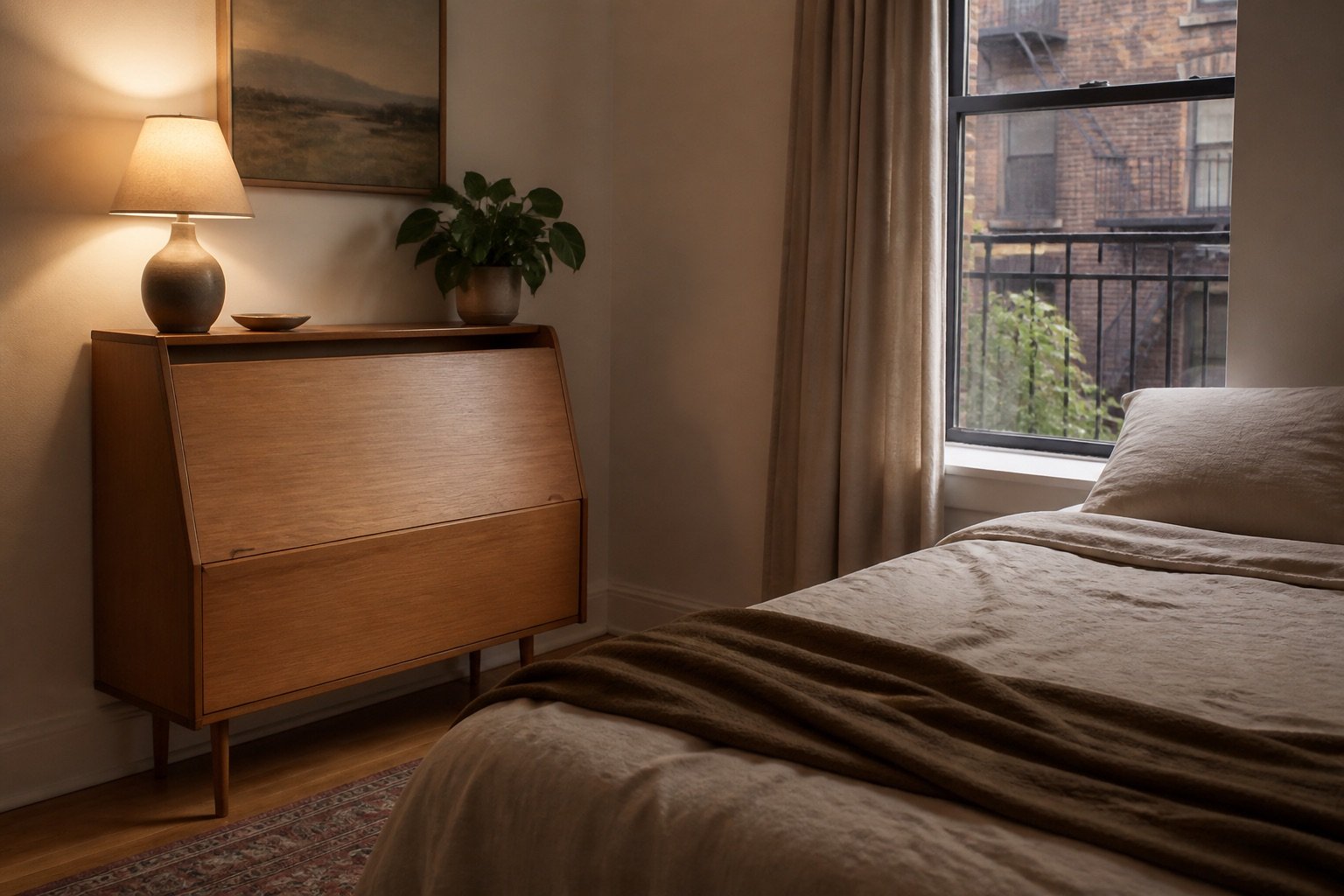
Visual closure matters in a room used for sleep. Close the laptop, clear the cup, return stationery to a drawer and switch from cool task light to the softer bedside lighting. A cabinet desk can physically hide the setup; a fixed desk can achieve a similar effect with one clear surface and a monitor cover or closed screen.
Use the same warm wood, muted green or gentle neutral already present in the bedroom so the desk feels like furniture rather than equipment. Keep office accessories restrained, but add one personal object or plant so the workspace feels welcoming during the day.
How to Choose Your Bedroom Office Setup
- Count working hours. Frequent use justifies a deeper desk and fully adjustable chair.
- Measure the open position. Include the chair pulled back, desk doors and fold-down surfaces.
- Check technology. List the monitor, laptop, lighting, charging and cable needs.
- Protect bedroom storage. Do not create an office by making clothing and bedside clutter worse.
- Plan closure. Decide exactly where every work item goes at the end of the day.
Common Mistakes to Avoid
- Buying the shallowest desk: It may place the screen too close for comfortable regular use.
- Using a dining chair: A nonadjustable chair becomes tiring during long sessions.
- Facing uncontrolled glare: Bright windows behind or in front of the screen reduce visibility.
- Blocking the bed route: A chair permanently in the walkway makes the whole room feel smaller.
- Exposing every supply: Too much open storage keeps work visually present at night.
- Ignoring heat and ventilation: Computers and chargers should not be enclosed while operating without adequate airflow.
Frequently Asked Questions
Where should a desk go in a small bedroom?
Use a low-traffic wall, alcove or corner that does not block wardrobes or the route around the bed. Position the screen perpendicular to a window when possible.
How deep should a bedroom office desk be?
Around 24 inches is a useful target for regular monitor work. A shallower desk may suit a laptop used for shorter periods.
Is it bad to have a home office in the bedroom?
It can blur the boundary between work and rest, but thoughtful positioning, concealed storage and a consistent shutdown routine reduce that effect.
Can a fold-down desk support a monitor?
Some can, but the wall fixing and manufacturer’s load rating must support the combined equipment and working pressure. Never assume all wall desks are suitable.
How can I hide an office in a bedroom?
Use a secretary cabinet, fold-down desk, closet office or fixed desk with closed storage. Conceal cables and clear the surface every evening.
What color works best for a bedroom office?
Warm wood, soft neutrals and muted greens blend easily with restful bedrooms. Repeating the room’s existing palette is more calming than introducing a separate corporate look.
Conclusion
A small bedroom office works best when neither function is treated as an afterthought. Protect the walking route, give the screen enough depth, choose an adjustable chair and store work vertically rather than spreading it across the floor.
Then design the end of the workday as carefully as its beginning. When cables, papers and equipment can be closed away, the room can return to feeling like a bedroom instead of a workplace that never switches off.