
This article contains affiliate links. If you purchase through one of these links, AllInsides may earn a commission at no additional cost to you. As an Amazon Associate, I earn from qualifying purchases.
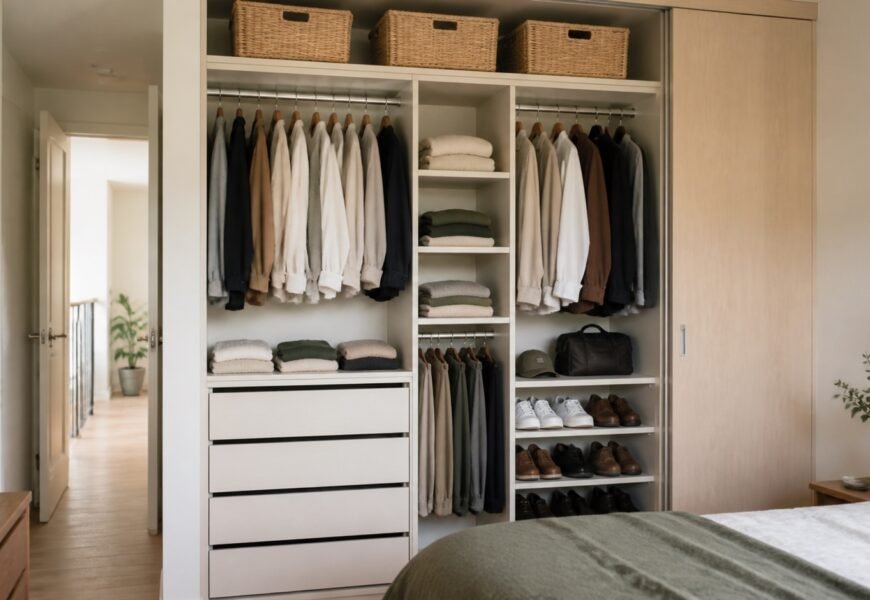
An overfilled wardrobe can make getting dressed feel harder than it should. Clothes disappear behind one another, folded stacks collapse, shoes spread across the floor and the pieces you wear most become difficult to reach.
The answer is not always a larger wardrobe. A small closet can work surprisingly well when every section has a clear purpose and the storage system reflects your daily habits. The aim is not to squeeze the greatest possible number of items inside. It is to make the right clothes visible, accessible and easy to return.
This guide shows you how to organize a small wardrobe step by step, using the rail, shelves, doors and floor more effectively—without a renovation.
Key Takeaways
- Edit before organizing: Remove clothes that no longer fit your life before purchasing storage products.
- Measure usable space: Record the rail width, shelf depth, floor area and door clearance.
- Organize around frequency: Keep everyday clothing between eye and waist level; move occasional pieces higher or lower.
- Use vertical storage selectively: Multi-tier hangers, drawers and shoe racks can reclaim wasted height when correctly sized.
- Leave breathing room: A wardrobe that is packed completely full is difficult to see and maintain.
Contents
- 1. Empty and Edit the Wardrobe
- 2. Measure and Map the Available Space
- 3. Create Simple Hanging Zones
- 4. Store Trousers and Skirts Vertically
- 5. Add Drawers Where Shelves Are Missing
- 6. Turn the Floor Into an Orderly Shoe Zone
- 7. Use a Folding System You Can Maintain
- 8. Rotate Seasonal and Occasional Clothes
- 9. Create a Five-Minute Wardrobe Reset
- How to Choose Wardrobe Organizers
- Frequently Asked Questions
1. Empty and Edit the Wardrobe
Start with one category rather than pulling out the entire wardrobe at once. Complete tops first, then trousers, knitwear, dresses, shoes and accessories. This keeps the room usable while you work.
For each item, ask whether it fits, whether you wear it, whether it suits your current life and whether you would choose it again today. Place definite donations directly into a bag. Move damaged items into a small repair pile with a deadline; if they are not repaired by that date, reconsider keeping them.
Avoid creating a large “maybe” category. If you need time, place uncertain pieces in a closed box and add a review date. Anything you did not retrieve during the trial period is a strong candidate for donation.
2. Measure and Map the Available Space
Measure before buying anything. Record the internal width and depth, the distance from the rail to the floor, shelf height, door clearance and any skirting boards or hinges that reduce usable space.
Next, identify the wardrobe’s natural zones. The central area is most convenient and should hold everyday clothes. High shelves suit lightweight seasonal items. The floor can hold shoes or stable drawers. Narrow gaps may suit bags, belts or a small laundry basket.
Sketching these measurements on paper prevents attractive organizers from becoming expensive obstacles.
3. Create Simple Hanging Zones
Arrange hanging clothes in broad groups—such as workwear, casual tops, dresses and outer layers—then order each group by length. Grouping by type is usually easier to maintain than an elaborate color-coded system.
Use hangers with a consistent shape so garments sit at a similar height. Slim hangers can create more rail space, but leave enough room to slide items apart. If clothes cannot move, you will struggle to see them and may forget what you own.
Keep the most frequently worn group nearest the wardrobe opening. Occasional outfits can sit at the far end.
4. Store Trousers and Skirts Vertically
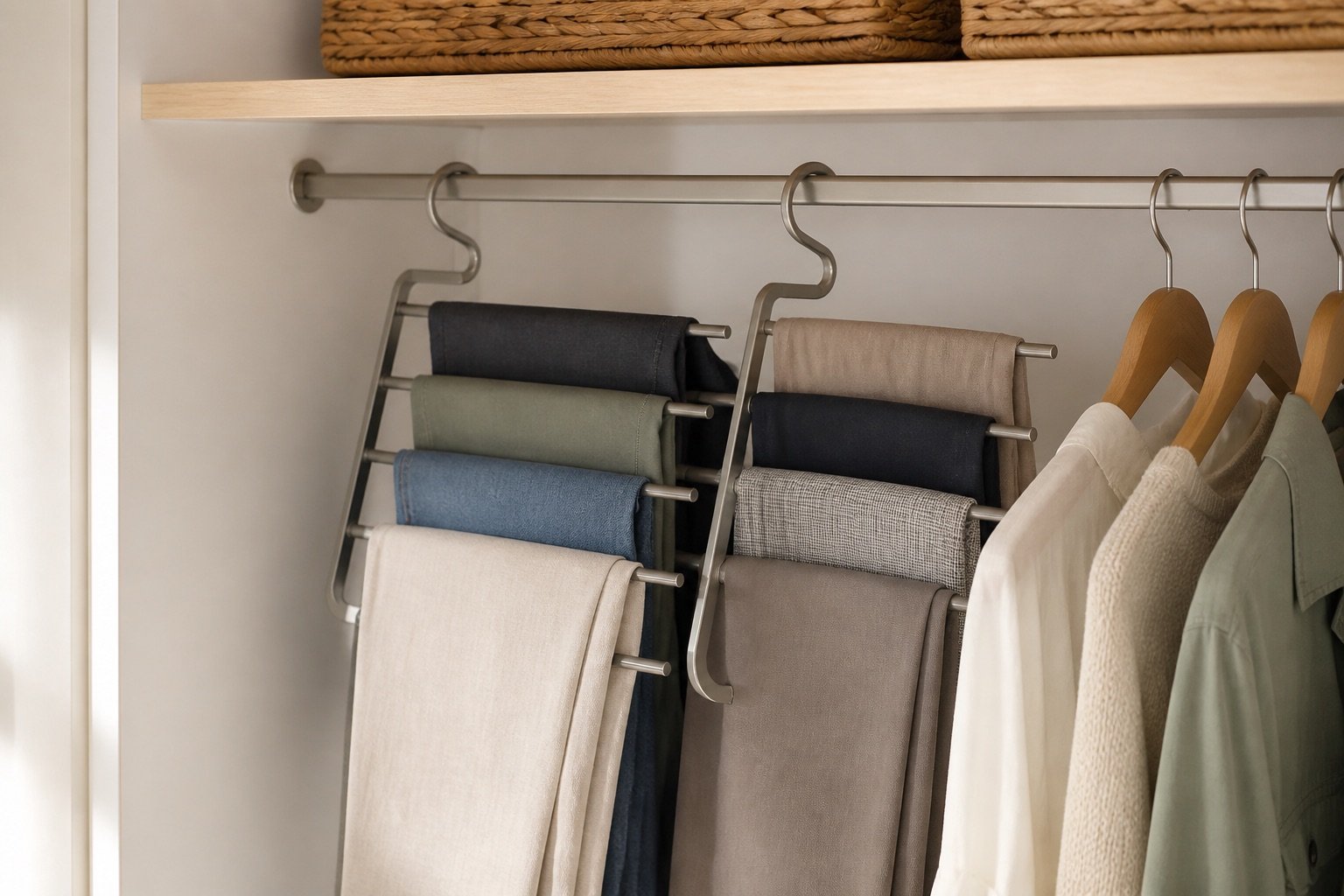
Trousers folded over individual hangers can consume a large section of rail. A multi-tier hanger groups several pairs vertically while still allowing you to see them.
The two-pack of six-tier pants hangers is one affiliate option for trousers, skirts and scarves.
Best for: Wardrobes with spare vertical drop below shorter garments.
Skip it if: Your rail is low, your trousers are very heavy or removing one item requires lifting the entire organizer.
Do not overload a tiered hanger. Divide clothes by type or frequency and confirm the rail can safely support the combined weight.
5. Add Drawers Where Shelves Are Missing
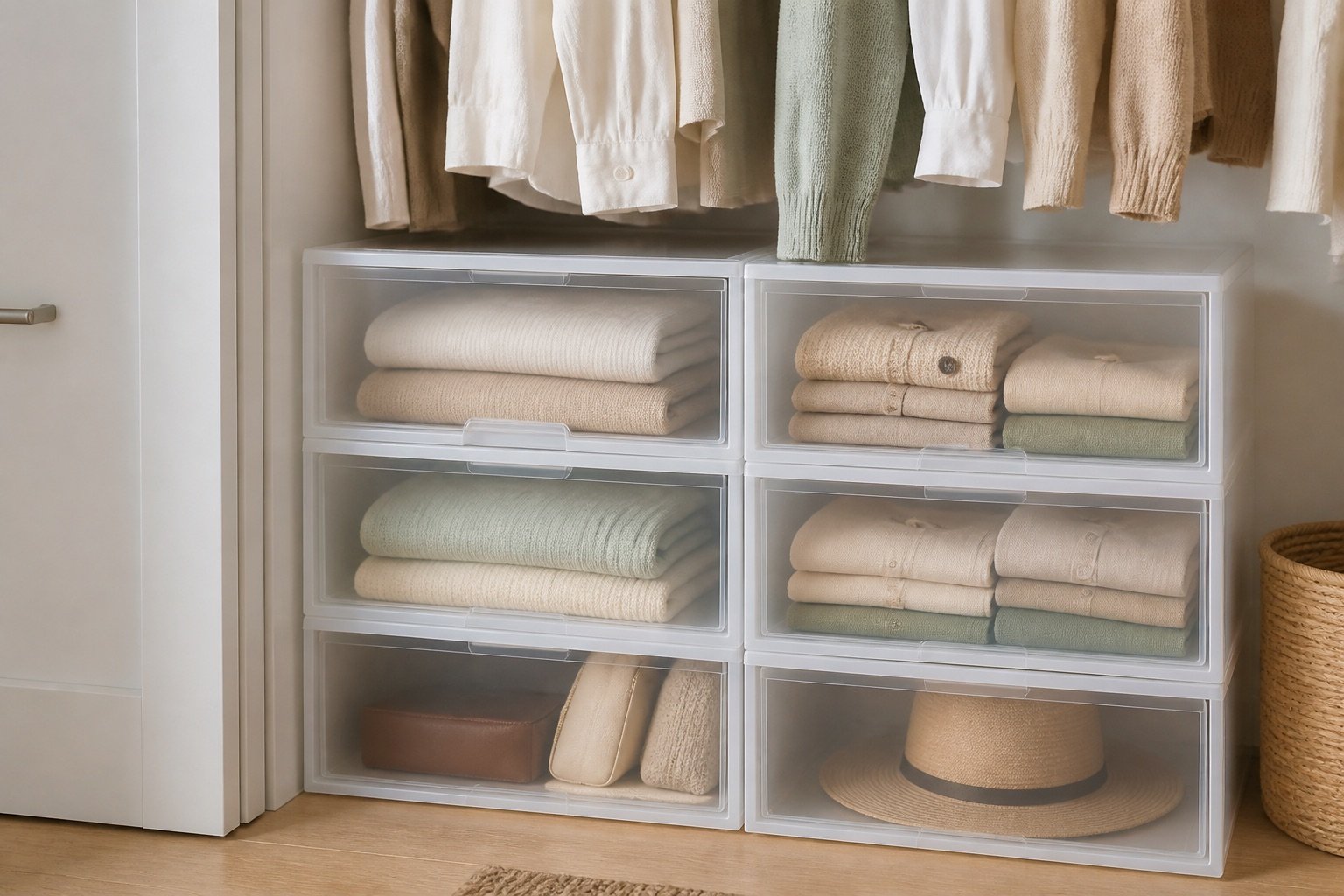
Deep open shelves often produce unstable piles. Drawers contain small categories and let you reach lower items without lifting everything above them.
The Vtopmart four-pack of stackable storage drawers can be used for knitwear, workout clothing, sleepwear or accessories.
Best for: Empty wardrobe floors, deep shelves and rental homes where built-in drawers are not practical.
Skip it if: The units would interfere with doors, hanging clothes or floor vents.
Assign one category to each drawer and avoid vague labels such as “miscellaneous.” Categories like belts, swimwear or gym tops are much easier to maintain.
6. Turn the Floor Into an Orderly Shoe Zone
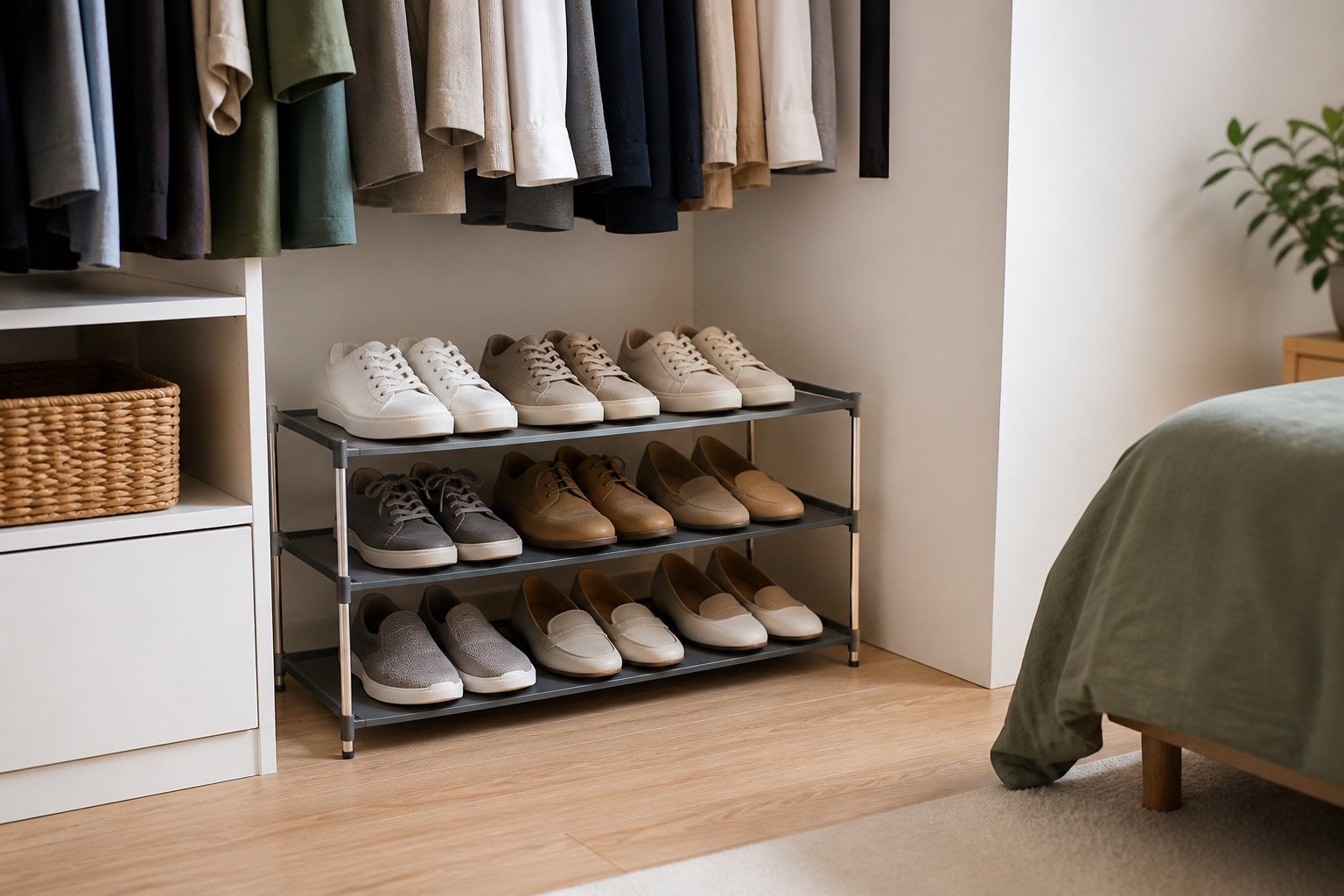
Shoes spread across the wardrobe floor waste space and make clothing harder to reach. Start by keeping only clean, wearable pairs in the bedroom. Store specialist, muddy or rarely worn shoes elsewhere when possible.
The Kitsure three-tier shoe rack is a compact option for using vertical floor space.
Best for: Everyday shoes in wardrobes with clear floor width below short garments.
Skip it if: Long dresses or coats need the full drop, or the rack would block sliding doors.
Keep the shoes worn most often on the easiest tier. Place occasional pairs higher or toward the back, and leave one open space so new shoes do not immediately create overflow.
7. Use a Folding System You Can Maintain
A folding method only works if you can repeat it quickly. Use short stacks for bulky knitwear and vertical file folding for lighter tops, activewear and sleepwear inside drawers.
Do not stack unlike categories together. A pile containing sweaters, T-shirts and gym clothes will be disturbed every time you reach for something near the bottom.
Shelf dividers or small bins can keep stacks from spreading, but they should support the system rather than add more steps. If you dislike folding, prioritize hanging space for crease-prone everyday items and reserve drawers for simple categories.
8. Rotate Seasonal and Occasional Clothes
Prime wardrobe space should reflect the current season. Move heavy coats, formalwear, holiday clothing and out-of-season pieces to high shelves or another dry storage area.
Clean garments before long-term storage and make sure they are completely dry. Use breathable containers for natural fibres and avoid compressing delicate fabrics for extended periods.
Label seasonal containers clearly and schedule two reviews each year. Rotation is also a useful opportunity to identify pieces that went unworn for an entire season.
9. Create a Five-Minute Wardrobe Reset
Once a week, return empty hangers to one end of the rail, refold disturbed items, reunite shoe pairs and move laundry out of the wardrobe. Check that no category has started spreading into another zone.
Keep a donation bag nearby. When you notice something no longer fits or feels right, move it out immediately instead of returning it to the rail.
If the reset regularly takes more than five to ten minutes, the wardrobe may still contain too much or the categories may be too detailed.
How to Choose Organizers for a Small Wardrobe
Choose each product in response to a measured storage problem. This comparison helps identify when an organizer is genuinely useful.
| Problem | Useful solution | Measure first |
|---|---|---|
| Trousers use too much rail width | Multi-tier hanger | Vertical drop and total weight |
| Folded stacks collapse | Stackable drawers | Width, depth and door clearance |
| Shoes cover the floor | Slim tiered shoe rack | Floor width and garment length |
| High shelves become cluttered | Lightweight labeled baskets | Shelf depth and safe lifting height |
| Accessories disappear | Small divided tray or shallow drawer | Category size and daily accessibility |
Prioritize stability, usable dimensions and ease of access over the number of compartments advertised. An organizer that technically holds more but makes items difficult to retrieve will not improve the wardrobe.
Wardrobe-Organization Mistakes to Avoid
- Buying organizers before decluttering: You may spend money storing clothes you do not wear.
- Using every centimetre: Completely filling the wardrobe removes the space needed to browse and return clothing.
- Storing heavy items too high: High shelves should hold lightweight, infrequently used pieces.
- Creating too many categories: A complicated system is rarely maintained during busy weeks.
- Ignoring garment length: Floor storage must not crush dresses, coats or trousers.
Frequently Asked Questions
How do I organize a wardrobe with no drawers?
Use stable stackable drawers or correctly sized bins on shelves and the floor. Reserve them for clear categories rather than mixed clothing.
Is it better to fold or hang clothes in a small wardrobe?
Hang crease-prone garments, dresses, shirts and frequently worn outfits. Fold knitwear, casual T-shirts, activewear and sleepwear. The ideal balance depends on the rail and shelf space available.
How can I make more hanging space?
Edit unused clothing first, use slim consistent hangers and group shorter garments together. A tiered hanger can use vertical space for trousers and skirts where there is sufficient drop.
Where should bags and accessories go?
Keep everyday accessories in a shallow drawer, divided tray or small basket near eye level. Store structured bags upright with light support so they keep their shape.
How often should I reorganize my wardrobe?
Perform a quick reset weekly and a fuller seasonal review twice a year. A complete reorganization should not be necessary if the categories still suit your routine.
Conclusion
A small wardrobe becomes easier to use when it contains fewer, better-defined categories. Begin by editing what you own, measure the actual space and give the most accessible areas to the clothes worn most often.
Add vertical hangers, drawers or a shoe rack only where they solve a specific problem. Leave enough room to move garments and maintain the arrangement without a lengthy routine.
For more carefully selected organization products, visit the AllInsides Amazon storefront.
The most successful wardrobe is not the one that stores the greatest number of clothes. It is the one that helps you see, choose and return what you genuinely wear.